LIVING KNOWLEDGE · FUTURE FORAGE
Abundance is resilience
Build a future with many sources of nourishment, not just one.
FIELD GUIDE / 01
When the unexpected happens
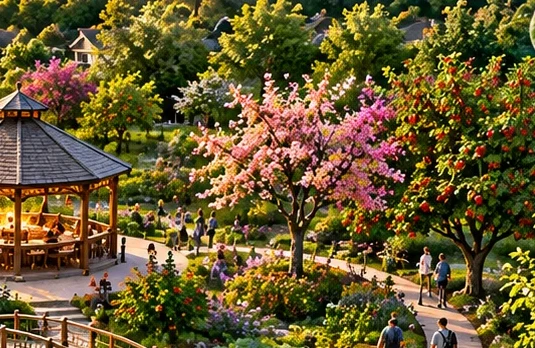
Drought, flooding, crop disease, transport disruptions and power outages can interrupt food availability. Distributed gardens, orchards and seed libraries can complement farms and emergency supplies. They cannot replace staple agriculture or guarantee food security. Grow a mix of foods, plan for water, preserve harvests safely and cooperate with neighbors.
FIELD GUIDE / 02
Beyond monoculture
Growing the same crop repeatedly can concentrate pest and disease risks and reduce habitat diversity. Intensive tillage, bare soil and excessive inputs can compound soil degradation. Crop rotation, cover crops, intercropping, reduced disturbance and diverse perennial plantings can improve resilience. Monoculture is not inherently unsustainable in every context; management matters.
FIELD GUIDE / 03
Life above and below the soil
Living roots feed soil organisms; fungi, bacteria and invertebrates cycle nutrients and help build soil structure. Diverse vegetation can improve infiltration, reduce erosion and provide food and shelter for insects, birds and mammals. Retain healthy native habitat and avoid attracting wildlife into dangerous road corridors.
FIELD GUIDE / 04
Air, water and climate
Plants release oxygen during photosynthesis and consume oxygen during respiration. Growing vegetation can store carbon, but decomposition and disturbance affect the net balance. More leaves do not automatically mean a meaningful increase in atmospheric oxygen. Local benefits include shade, cooling, water retention and habitat when planting is appropriate. US Forest Service: oxygen production by urban trees.
FIELD GUIDE / 05
A practical community goal
Start one authorized edible planting, preserve existing healthy trees, replace a small area of low-use turf, include seasonal native flowers and share surplus food. Track plant survival and habitat quality rather than counting seeds alone.
FIELD GUIDE / 06